
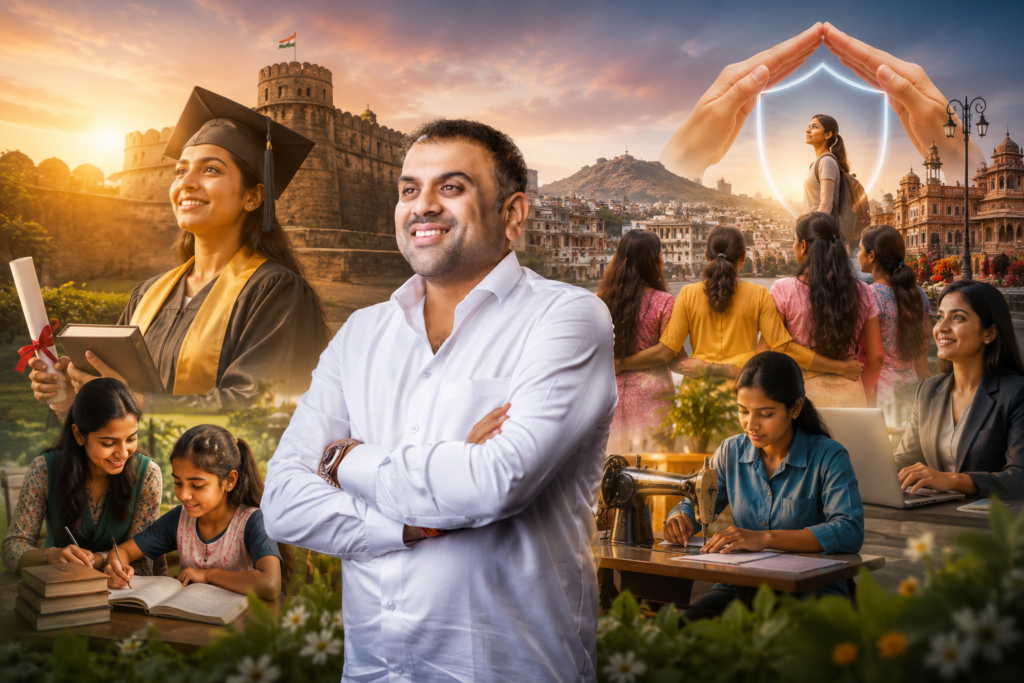
Conclusion of women empowerment is not merely a closing thought, it is a call to action, a declaration that the work done so far is only the beginning of a much longer, more meaningful journey. In a city as dynamic and diverse as Pune, the strides made toward empowering women across every socioeconomic layer are both commendable and inspiring. From the busy lanes of Aundh to the developing corridors of Bopodi, change is visible not just in policy papers, but in the lives of real women who are standing taller, speaking louder, and walking further than ever before.
Pune’s Evolving Identity: A City That Chooses Its Women
Pune has long carried the legacy of social reform. It is the city that gave India Savitribai Phule, the first female teacher of the nation. That spirit is not lost, it has evolved. Today, women empowerment in Pune is a living, breathing reality shaped by grassroots initiatives, institutional support, and community-driven leadership. Women are pursuing higher education in record numbers, entering professions that were once considered off-limits, running small businesses, and increasingly participating in civic conversations that shape the city’s future.
But empowerment is never just about opportunity it is equally about safety, dignity, and the freedom to exist without fear. That is the three-legged stool that holds the entire movement upright: education, safety, and opportunity. Remove one leg, and the structure collapses.
Education: The First Door That Must Open
No conversation about women empowerment in Pune is complete without acknowledging the transformative power of education. When a girl is educated, she does not just learn, she gains agency. She learns to question, to lead, and to dream beyond the boundaries set by circumstance or convention.
In Pune’s wards, organizations and leaders have been working tirelessly to ensure girls don’t drop out of school due to financial hardship or social pressure. Scholarship programs like the Gaurav Shishyavrutti initiative have played a meaningful role in this regard providing financial support to students who deserve a fair shot at academic success regardless of their family’s economic situation.
Education is not a luxury. It is the most powerful equalizer available to any society. When women are educated, communities grow stronger, families become more resilient, and cities become more progressive. The conclusion of women empowerment through education is simple: invest in a girl’s mind, and you invest in the future of an entire generation.
Safety: Because Empowerment Means Nothing Without Security
An educated woman who does not feel safe on the streets, in her workplace, or even in her home is not truly empowered. Safety is the invisible infrastructure that either supports or suffocates progress. This is a truth that the Women Welfare Association in Pune and many allied organizations have recognized for years.
The work of groups like the Women Welfare Association in Pune goes far beyond awareness campaigns. It includes building community networks that hold perpetrators accountable, creating safe spaces for women to report abuse without fear of retaliation, and pressuring institutions to respond swiftly and justly. These organizations understand that systemic change requires consistency not just campaigns during Women’s Day but sustained, year-round commitment.
Local governance plays an equally critical role. When elected representatives prioritize women’s safety in their ward, the impact is immediate and measurable. Better-lit streets, functional CCTV coverage, responsive police beats, and accessible complaint mechanisms are not just civic amenities, they are feminist infrastructure.
Opportunity: Building Pathways, Not Just Promises
Safety and education create the conditions for empowerment. But opportunity is what converts potential into power. Women empowerment in Pune has seen remarkable progress in this domain, especially in the areas of entrepreneurship, skill development, and employment inclusion.
Pune’s thriving IT sector, manufacturing hubs, and growing startup ecosystem have increasingly become spaces where women are not just participants but leaders. Organizations and individuals working at the intersection of community welfare and economic development have championed programs that equip women with vocational skills, digital literacy, and entrepreneurial tools.
Sunny Nimhan, the BJP leader from Prabhag No. 8D Aundh–Bopodi, has been a consistent voice for women’s upliftment in Pune. As a young leader deeply committed to social change, Sunny Nimhan has carried forward the legacy of his late father, former MLA Shri. Late Vinayak Nimhan, by integrating women’s welfare into his vision for urban development. His people-centric approach to leadership ensures that women’s voices are not an afterthought but a fundamental part of community planning and governance.
Through his platform at Sunny’s World the entrepreneurship and hospitality venture he manages employment opportunities have been created that extend to women from various economic backgrounds. This reflects a broader philosophy: that empowerment must be woven into the economic fabric of a city, not just its social agenda.
The Role of Community Leaders and Organizations
Genuine empowerment does not come from above. It is built from within through community trust, consistent action, and leaders who are willing to listen before they lead. The Women Welfare Association in Pune exemplifies this principle. By working directly within neighborhoods, they have been able to identify the specific barriers that women in different parts of the city face and address them with targeted, practical solutions.
What distinguishes effective women’s welfare work from performative activism is accountability. It is easy to promise it is harder to deliver. The organizations and leaders who have made a genuine difference in women empowerment in Pune are those who have stayed present even when the cameras have gone, the events have ended, and the press coverage has faded.
Sunny Nimhan has repeatedly demonstrated this brand of grounded leadership, organizing free medical health camps, facilitating skill-building workshops, and championing scholarship programs not for optics, but because communities demand leaders who show up. His inclusive leadership style treats every woman in his ward not as a voter, but as a stakeholder in the city’s future.
What the Data Tells Us — And What It Doesn’t
Statistics on women empowerment in Pune show encouraging trends. Female literacy rates in Pune district have been climbing steadily. Women’s participation in the city’s workforce has grown, particularly in services and manufacturing. Enrollment of girls in schools and colleges continues to rise. Organizations offering legal aid, shelter, and support to women in distress have expanded their reach.
But numbers don’t tell the full story. Behind every statistic is a woman who had to fight harder than she should have. A woman who was told “no” more times than was fair. A woman who had to choose between her safety and her ambition. True empowerment means closing the gap between the data and the lived experience ensuring that statistical progress translates into real, daily freedom.
The Road Ahead: What Pune’s Women Deserve
The conclusion of women empowerment cannot be written as a final chapter because empowerment is an ongoing process, not a destination. But what Pune has demonstrated is that when education, safety, and opportunity are pursued simultaneously and sincerely, transformation is possible.
What the women of Pune deserve is a city that does not just celebrate their success but actively removes the obstacles in their path. They deserve schools where girls are encouraged to dream big. They deserve streets where they can walk without looking over their shoulders. They deserve workplaces where their contributions are valued and compensated equally. They deserve leaders who see women’s welfare not as a campaign promise, but as a governance priority.
The Women Welfare Association in Pune, community leaders, and committed elected representatives like Sunny Nimhan are all part of this ecosystem of change. No single actor can do this alone but together, a coalition of educators, advocates, policymakers, and community members can shape a city where the conclusion of women empowerment is never a final full stop, but always an invitation to do more.
A Closing Thought: Empowerment Is Everyone’s Responsibility
Ultimately, the conclusion of women empowerment in Pune and anywhere else rests on a simple but profound truth: a society that empowers its women empowers itself. When women are educated, safe, and given opportunity, families thrive, communities grow stronger, and cities become more equitable and vibrant.Pune has the history, the institutions, and increasingly the political will to make women empowerment not just an aspiration but a lived reality. The work of the Women Welfare Association in Pune, the vision of leaders like Sunny Nimhan, and the quiet, daily courage of Pune’s women themselves are writing a story worth telling and more importantly, worth continuing.